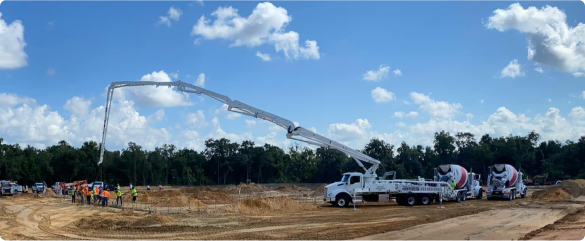


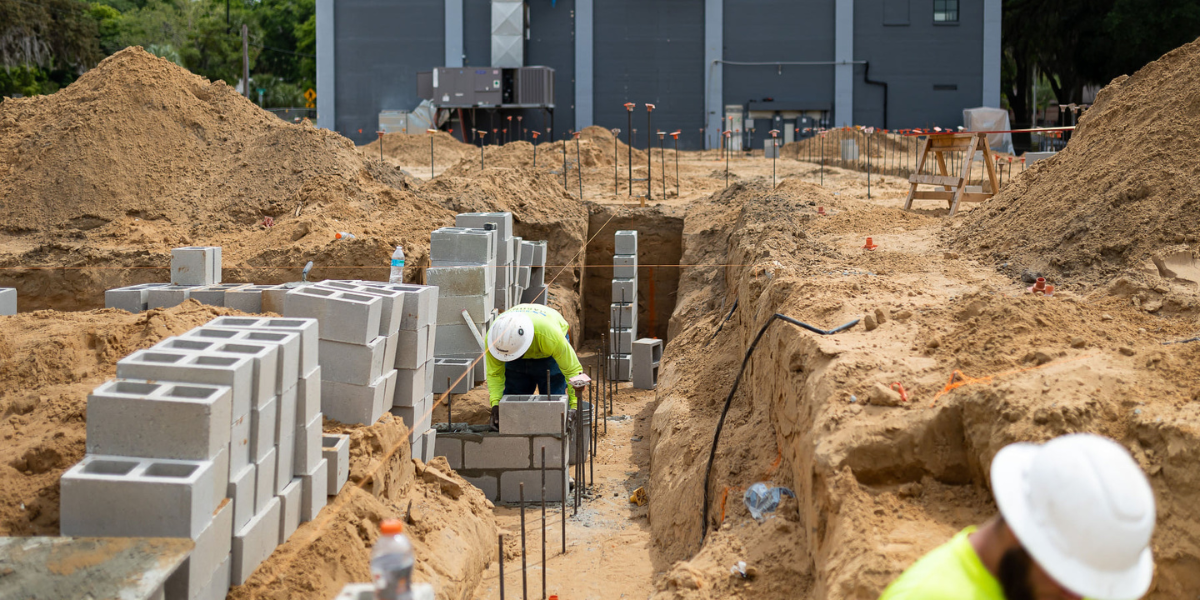
Concrete block and brick are famously tough, but Florida’s mix of hurricane winds, salt air, and humidity can shorten any wall’s life if a few fundamentals are ignored. We pay attention to the right mix, proper drainage, and sealing so that your masonry will stand the test of the state’s unpredictable climate. Here’s how.
1. Mix Matters.
In Central Florida, we rely on concrete and mortar blends that shed moisture and provide slabs and walls with a dry, durable core even through long, rainy summers. The emphasis is on low-permeability mixes and bond-strong mortars that hold up to water and rain. Sidewalks, patios, and other exposed flatwork get an air-entrained blend so afternoon downpours drain quickly and mildew can’t form. Along the coasts we simply tighten that recipe with marine-grade cement and corrosion inhibitors to keep salt out of the steel.
2. Keep Water Moving.
Florida downpours dump inches of rain in just minutes, so walls must drain as quickly. We build in three simple details to do so: 1. a continuous through-wall flashing at each slab ledge to catch water that slips behind the veneer; 2. a metal drip edge under every sill to kick runoff clear of the face; 3. and weep vents spaced every couple of feet so collected water can exit. Together they let moisture escape instead of forcing it deeper into the structure. A breathable silane or siloxane sealer also adds a final safeguard to tighten surface pores while still allowing the wall to dry out.
3. Plan for Expansion, Contraction, and Wind.
Temperature swings and hurricane gusts can cause shifts in masonry work. Vertical control joints every 25–30 feet in block or brick veneers are what give the wall somewhere to move without cracking. Reinforcing bars should extend from footing to bond beam, fully grouted, so loads travel through continuous concrete rather than individual blocks.
4. Protect the Top and the Termite Line.
Most leaks start at the parapet, not the face. A parapet is the low wall that rises above the edge of a flat-roof building. Think of it as a short guardrail wrapping the rooftop. Because it sticks up, it takes the full hit of wind-driven rain, and its top surface is almost horizontal. Water that pools or seeps through cracks here can drip down inside the cavity, showing up as leaks below. To prevent leaks, we cap the exposed block with precast or metal coping and extend flashing beneath the roof membrane, sealing the joint so wind-driven rain can’t creep downward.
On termites: they leave masonry alone but attack anything wood. Keeping the first wood member (sill plate, baseboard, or furring strip) at least six inches above finished grade lets inspectors spot mud tubes early and apply treatments that stay effective.
5. Preserve Color and Cleanliness.
South and West facing walls fade fastest under harsh light and UV rays. A breathable sealer every five years slows chalking on split-face block and keeps brick pigments rich in color. Cleaning should be low pressure and use neutral cleaners as needed, not acid, to avoid etching the surface.
Bottom line: Florida rewards masonry that can breathe, drain, move a little, and block salt. Pay attention to mix design, flashing, reinforcement, and routine sealing, and your walls will shrug off the toughest weather for decades.
One Call Away for Expert Masonry and Concrete
Need a deeper dive? Our estimating desk is always one call away to look over your plans and recommend the right concrete and mortar blends for your location. 352-860-0560